New year, clear choice: we’re not racing to the bottom
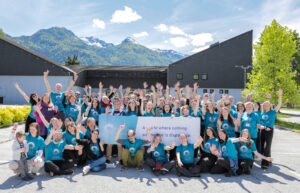
Back in 2006, the foundations of what became Zero Waste Europe were laid by a small group of civil society groups and communities. Their conviction was simple: waste isn’t inevitable, and that no one and nothing should be disposable. Twenty years on, that idea matters more than ever.
We enter 2026 in a world going in two directions at once. One path accelerating the old logic: more extraction, less democratic safeguards, and more sidelining of communities. The other path, the one our network is committed to keep building, is grounded in a wise use of our resources, and in community resilience.
This isn’t idealism. It’s about common sense and a vision that takes us beyond the immediate. It’s a commitment to ensure an environmentally safe and socially just space for humanity as set in our 2025-2030 Strategic Framework.
Whether we like it or not, Europe cannot out-mine or out-produce other regions, and above all, there is no glory in being first on the wrong podium.
But we can lead on something far more valuable: strategic material use and design intelligence, with the safety and wellbeing of communities at their core. By keeping critical materials in circulation through longer product life, better repair infrastructure, and safe and non-toxic recycling, we reduce dependency whilst creating jobs in service, remanufacturing, and reprocessing, etc.
This is what real economic power in a finite world looks like: better use of resources and autonomy, not resource intensity and dependence. Not racing to the bottom, but creating value that lasts, built from the ground up.
And that’s also why a strong focus on the Circular Economy offers us a rare chance to redesign the foundations of a healthy, functioning economy – as long as we make sure we address material (over)consumption, a topic alarmingly overlooked in policy discussions and business practices.
In 2026, we’ll maintain steady efforts on the Circular Economy Act (CEA), including strong proposals on the Extended Producer Responsibility (EPR) schemes (among others); and ensure we create the right conditions to move up the waste hierarchy.
We’ll keep building working models that prove zero waste makes sense economically, socially and environmentally, in the fields of textiles, food waste prevention, and packaging reuse with cities and businesses, in partnership with our spin-off Mission Zero Academy.
This year, we’ll also further expand our global and cross-regional collaboration efforts on methane, reuse,… starting with a Deposit Return Scheme (DRS) workshop in Manila (the Philippines) this month with the Global DRS Platform, working alongside local groups, government officials and solution providers.
But we’re under no illusions about the challenges ahead. Threats against civil society are real and growing: funding cuts, shrinking civic space, coordinated efforts to sideline independent voices. This makes our work more essential, not less. Which is why this year we’ll be doubling down on support for our members’ advocacy and on-the-ground mobilisation, strengthening the network’s collective reach and resilience when it matters most.
At ZWE, we’re fortunate to work alongside members and partners who bring expertise, creativity and determination to this work every day. The challenges are significant, but so is the evidence that change is possible. Communities across Europe and beyond are already living proof that we can meet our needs without waste, create prosperity without depletion, and build economies that serve both people and the planet.
The old model promises more of the same. We’re building something better: systems that last, economies that work for people, and a future worth inheriting.
Here’s to the work ahead.