#MeetTheTeam – Dorota Napierska
It’s time to discover and learn more about the people behind Zero Waste Europe’s work and magic! In addition to the ZWE Changemakers series, where you can learn more about our member organisations, we invite you to get a closer look at our staff, what they do, and what inspires them to work for a zero waste future.
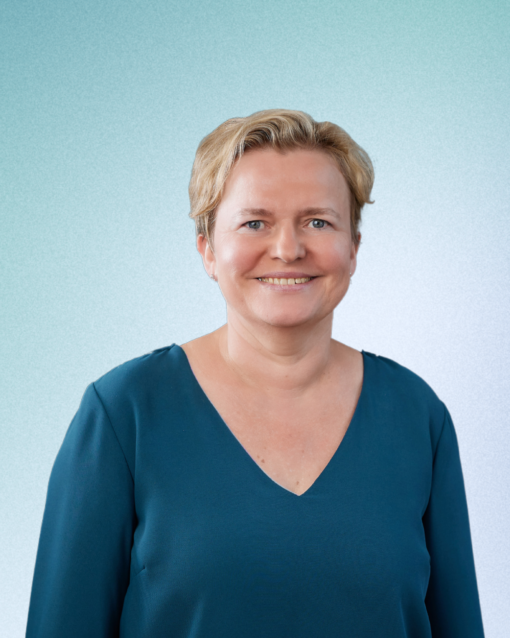
This time, we sat down with Dorota Napierska, our Toxic-Free Circular Economy Policy Officer who has been at Zero Waste Europe since August 2021.
How did you come to join Zero Waste Europe?
In my previous position, I had collaborated with colleagues from ZWE and was truly impressed by their work and all that ZWE had achieved. So, when the opportunity arose to work on chemicals and chemical safety within the organisation, I didn’t hesitate to apply. Since then, I haven’t regretted my decision, not even for a single day.
What motivated you to work for a toxic-free Europe?
I spent the majority of my career working in academia as a toxicologist, including in aquatic toxicology and the biomedical field; for a long time, my job was linked to identifying chemicals that can cause harm, to ensure human and environmental safety. This allowed me to become aware of how many problematic chemicals are present in our daily lives, incl. the products we consume, and how the law is actually failing to effectively protect us, the society, from being exposed to these same chemicals.
You can say that I exchanged long hours of using lab equipment and writing scientific papers for work that I feel can be more impactful in terms of making our lives more toxic-free.
What would you say is the most interesting part of your job?
One of my biggest lessons learned is that while chemicals and toxicology is a complex and difficult field to understand, policy work is not necessarily any less complex.
The most interesting and motivating parts of my job are the focus on evidence, relevance, and consistency, as well as the everpresent need for flexibility and adaptability in policy making. My job also allows me to meet extremely dedicated, passionate, and inspiring people. So, I feel really privileged and grateful for the opportunity to work with so many amazing thinkers and changemakers.
What would you say is your greatest professional achievement while working at ZWE?
I don’t like to list things as my personal achievements as I believe any achievement, especially when working on a topic of chemical safety, is possible only due to the team effort. And I’m lucky to have support from colleagues who bring this topic to different discussions and fora and actively advocate for better rules on chemical safety.
If I need to name such an achievement—I would say that it was ZWE’s engagement in shaping the Packaging and Packaging Waste Regulation and securing important (improved) requirements on the use of hazardous chemicals in packaging—including a ban on the use of PFAS in food packaging.
What are the biggest challenges that you face in your work?
That would be the part of my job that involves investing a lot of time and energy into rebutting the not entirely evidence-based arguments put forward by vested interests, counterproductive lobbying by industry, and ultimately new laws losing their true purpose and effectiveness due to such lobbying. This can be very frustrating, exhausting and discouraging.
My job also often requires hard work at a high-speed pace. As one of my colleagues once said: “The chemicals field is a dangerous landmine”. But if you ask me—it is worth all the downsides, if you manage to secure change that makes people’s lives healthier and safer.
What is an aspect of your work that you find fun?
I mentioned already that my job allows me to meet extremely dedicated and inspiring people. But—lucky me!—my job also allows me to work with people who have a great sense of healthy humour and can make me laugh, no matter what. Many of the things I learn and share can be truly depressing, so when work is becoming heavy, a touch of humour and having fun are simply priceless.
In your view, which actions are needed to ensure that the products and packaging Europeans consume are safe, toxic-free and support the circular economy?
What is needed is a systemic change in how we currently design, produce, consume and dispose of products and packaging. The first action would be to truly acknowledge that so-called economic growth is not a panacea for the wellbeing of society—when the same economy is making society sicker with each generation.
Looking ahead, which developments or priorities will you be focusing on in your work?
I would like to see one big piece of EU legislation FINALLY get revised and improved, namely the Food Contact Materials regulation. This law should ensure the safety of any article or material which is in contact with food, which covers many everyday consumer products, such as food and drink packaging, cutlery, dishes and kitchenware. These products can be made from a variety of materials such as plastic, paper, rubber, glass, ceramic, and metal, and unfortunately, there are multiple health concerns related to the chemicals they may contain. The European Commission committed to updating the 20-year-old rules in 2020, but the revision of the law is still pending.
Are there any other resources or topics that you want to highlight?
I believe that our more recent resources like ZWE’s manifesto asking for a Health Deal followed up by a set of recommendations on actions needed to achieve a toxic-free circular economy are worth checking. Here, we want to expand current policymakers’ focus on carbon or recycling to the “big picture” of our problems and the solutions we need.
Want to learn more about Dorota and her work? You can reach out to her at [email protected]